Secret Sister Scam: Avoid Holiday Gift Exchange Scams



Key Takeaways
- The “Secret Sister” gift exchange on Facebook is a scam: It promises up to 36 gifts in return for sending one, but it's actually an illegal pyramid scheme that leaves participants empty-handed.
- It tricks people into sharing personal info: You’re asked to provide your name, address, and even your friends' details, making you a target for identity theft.
- It spreads through social pressure: Once you join, you're pushed to invite others, helping the scam grow while putting more people at risk.
- Stay cautious with chain-style posts: Don’t click on these or share them, report them instead. Offers that sound too good to be true usually are.
- Stick to trusted circles: Only join gift exchanges with people you know in real life to avoid giving away sensitive information to strangers.
With the holidays coming up, scams are on the rise. Everyone loves a good Secret Santa game, and it can be fun participating in an online game which includes people from all over the world. Sadly this is taken advantage of and could lead to taking part in one big scam.
The latest scam warning from the BBB (Better Business Bureau) is a gift exchange post on social media, which promises between 6 and 36 gifts to participants. This gift exchange scam is known as the "Secret Sister", and is making a comeback to Facebook. The innocent-looking posts are, in fact, part of a pyramid scheme that is considered illegal.If this sounds familiar to you, you probably heard about it way back in 2015, when the scam first surfaced on Facebook. The scam back then also included a post promising participants gifts in return for sending one gift valued at $10. And who doesn't love freebies? Especially around the holidays. The participants were encouraged to invite friends to join, the more the merrier, but it turned out to be a pyramid scheme.
{{component-cta-custom}}
How Does the Sister Scam Work?
It starts with a persuasive post encouraging you to sign up for a fun game promising up to 36 gifts. First, you add your name and address to a list of so-called other participants that you have never met, as well as the personal information of some friends. Once you're signed up, it's your turn to send the invitation, adding more and more people to the cycle.
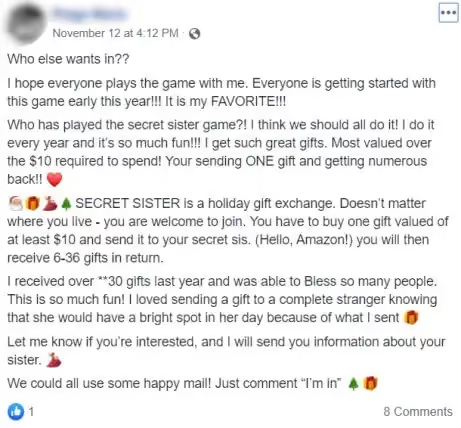
The participants start to buy and ship gifts to people they don't know, hoping to receive some in return. But in reality, they are left disappointed with no presents and, even worse, become vulnerable to cybercriminals who can get access to their personal information.
{{component-did-you-know-custom}}
How Can I Stay Secure From the Sister Santa Scam?
- Never click a "chain letter" style post: Not only could this be illegal to participate in, but you could also be putting yourself and loved ones at risk of a much bigger scam. Do not click these posts and go to the upper righthand corner of the post to report it.
- Keep your personal information to yourself. Don't provide your personal information to people you don't know. It could expose you to identity theft and other scams. Check if you're data has been breached.
- Be suspicious. Pyramid schemes are illegal and will try to lure victims by claiming they're legal and authorized by the government. Don't fall for it. There is no such thing as easy money and gifts that are too good to be true.
- Browse with protection. Having a protection tool like Guardio can save you so that even if you click on a link that will take you to a phishing third party site asking for your information, you will get an alert before entering.
{{component-tips}}
Conclusion
The “Secret Sister” gift exchange may look like harmless holiday fun, but it’s actually an illegal pyramid scheme that puts your personal information at risk. Participants are misled into sharing their details and sending gifts to strangers, often receiving nothing in return while exposing themselves to potential identity theft. To stay safe, avoid chain-style posts, protect your personal data, and be cautious of offers that seem too good to be true. Stick to playing them with only people that you know. Happy & Safe Holidays!
{{component-cta-custom}}
FAQs
What’s the safest way to join a holiday gift exchange online?
Only participate in private, invitation-only exchanges and keep your details out of public posts.
- Say no to viral chains, if it asks for your info and promises multiple gifts, it’s a scam.
- Stick to real-world groups like trusted school, work, or community circles.
- Avoid sending gifts to strangers unless it's through a verified nonprofit program.
- Report any suspicious posts directly on the platform, don’t just scroll past them.
Learn how Guardio helps you identify sketchy links before you even click.
What should I do if I gave out personal info in a scam like Secret Sister?
Act fast to prevent identity theft and secure your online accounts.
- Change passwords immediately for any accounts tied to the email you shared.
- Use Guardio’s Identity Monitoring to check if your data is already circulating online.
- Set up Credit Alerts with your bank or credit bureau as an extra precaution.
- Warn others you may have included, they could also be at risk now.
See how to manage your monitoring list with Guardio in seconds.
Why do scams like “Secret Sister” spread so fast?
Scammers exploit trust, urgency, and social pressure to make fake offers go viral.
- They use friendly wording and emojis to sound fun and harmless.
- They piggyback on real traditions like Secret Santa to seem legitimate.
- They count on social sharing, one participant can lead to dozens more victims.
- Many people don’t report it because they're embarrassed or unsure it’s a scam.
Help others stay ahead by sharing this quick guide on social media scam red flags.
Can Guardio really stop me from falling for scams like this?
Yes. Guardio flags malicious sites, filters phishing messages, and scans for your leaked info.
- Get alerts if a phishing link tries to steal your info.
- Block scam websites before they ever load in your browser.
- Filter scam texts and junk DMs with Guardio’s mobile app.
- Use the dashboard to see what Guardio has blocked and why.
Learn what Guardio’s real-time protection can do for you today.
What if someone I know keeps sharing scams? Can Guardio help?
Absolutely. Guardio protects you even when friends unknowingly share dangerous links.
- Turn on Browsing Protection to auto-block harmful sites across your devices.
- Message your friend privately with a heads-up (they may not know it’s fake).
- Report the post on Facebook, don’t engage in the comments.
- Set up Critical Security Alerts to catch urgent risks early.
Learn how to activate alerts with Guardio.


 Phishing Scams
Pig Butchering Scams: What They Are & How to Avoid Them


