Scammers Are Using Your Phone Number: What to Do When Your Number Is Spoofed



Key Takeaways
Your phone buzzes. A stranger on the other end is furious, demanding to know why you called them three times today about a car warranty. You never called anyone. But to them, the proof is right there on their screen: your number.
This is phone number spoofing, and the frustrating part is that it usually has nothing to do with your phone being hacked. Scammers don't need access to your device to use your number. They just need the right software, and your number becomes their cover story.
Here's what's actually happening, what the real risks are, and what you can do about it.
What does it mean when your number is spoofed?
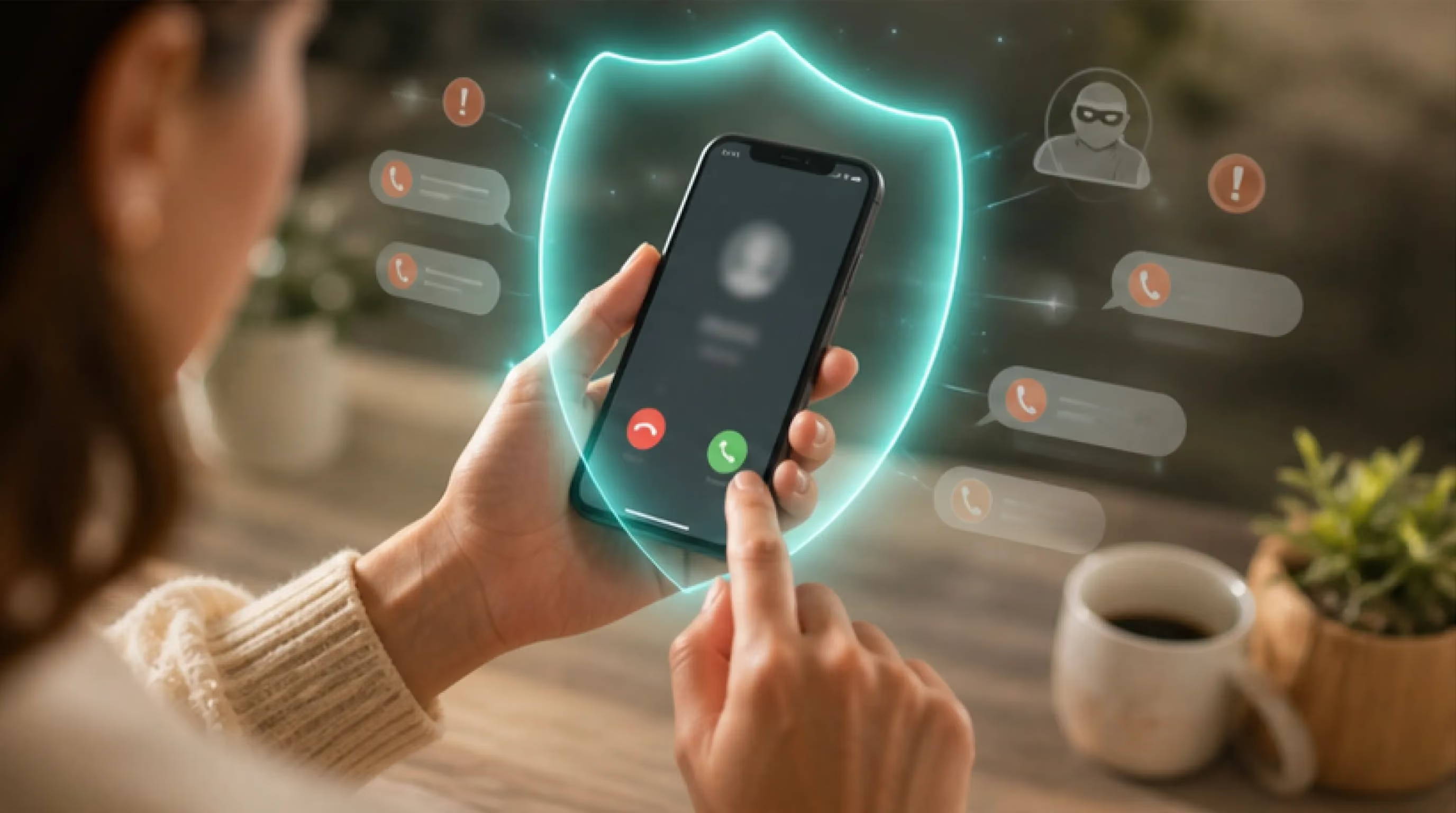
Spoofing works by manipulating the caller ID spoofing information that travels alongside a call. Scammers can falsify caller ID so that any number appears on a recipient's screen, including yours. Your phone doesn't ring, and nothing shows up in your call history. You have no idea it's happening until someone calls you back.
The FCC describes spoofing as deliberately falsifying the information sent to a caller ID display, and scammers often make a call look local or familiar because people are more likely to answer one. That's the whole point: your number makes the scam feel real to the person receiving it.
A common version of this is "neighbor spoofing," where the scammer displays a number similar to the target's own, so it looks like a local call. Your number might be used to reach people you've never met, in zip codes across the country.
How did your number end up in a scammer's hands?
It's rarely random. A few things can put your number on a scammer's radar:
- Data breaches and resold lists. Phone numbers are often included in leaked records. If yours appeared in a breach, it can end up in lists that get shared or sold. The FTC says robocallers get numbers from lists that are collected and resold, and sometimes dial at random.
- Data brokers. These companies collect publicly available personal information and sell it to third parties. Your number might be in directories, public records, or on a social media profile you forgot you made public.
- Neighbor spoofing. Scammers often pick numbers similar to the ones they're calling, so yours may simply fit the pattern.
The point is: you don't have to have done anything wrong. Your number being spoofed doesn't mean you were specifically targeted, and the FTC notes that scammers don't care whose number they use.
How to tell if your number is being spoofed
There's no alert, no notification, and nothing on your bill. The signs come from the outside. Here's what to watch for:
Calls from strangers who say you called them. This is how most people find out, and the FCC says it's likely your number has been spoofed. Someone returns a call they received from your number, even though you never made it. If this starts happening more than once, your number is likely being actively used.
Your number shows up as spam. Spam-blocking apps like Truecaller and RoboKiller maintain databases of reported numbers. Both offer lookup tools where you can enter your own number and see if it's been flagged, though Truecaller's lookup requires an account. Techlicious recommends checking several services, including both, since no single database covers everything.
You're suddenly getting a lot of missed calls or voicemails from unknown numbers. People who received a spoofed call from "you" and want answers will often call back. A spike in mystery callbacks is a possible signal.
What are the real risks?
The immediate inconvenience is fielding angry callbacks. But the risks go further than an annoying afternoon.
Reputation damage. Your number may get flagged as spam. Legitimate calls you make, to your doctor, your kids' school, a job contact, may go unanswered because your number now looks like a robocaller.
Identity confusion. If the scammer is impersonating you to people who actually know you, friends or family might act on what they think is your instruction. That's when spoofing crosses into something more dangerous.
Becoming the target yourself. You may also see a call or text that appears to come from your own number. The FTC says a text from your own number is a scam, so don't click links and report it. Minnesota's attorney general advises not answering calls from your own number, sharing nothing if you do, and reporting it to your carrier, the FTC, and the FCC.
Not a sign you were hacked. Because scammers don't care whose number they use, being spoofed usually isn't a sign that your phone or accounts were compromised.
What to do when your number is being spoofed
You generally can't prevent someone from faking your number. Carriers use call authentication (STIR/SHAKEN) to make spoofing harder, but it has gaps, such as calls that cross networks that don't use internet-based calling. But there are practical steps that reduce the damage and help the situation resolve faster.
1. Update your voicemail greeting. Record a message that explains your number is being spoofed. Something simple: "If you received a call from this number recently that you didn't expect, that wasn't me. My number is being used by scammers. Please don't call back, and report the call to the FTC at reportfraud.ftc.gov." This deflects frustrated callbacks, and the FCC suggests a voicemail message as a way to let callers know your number is being spoofed.
2. Alert your close contacts. Neighbor spoofing typically targets random numbers in your area, not your actual contacts. But if the scammer has more of your personal data, your contacts could be targeted specifically. A quick message to family and close friends to ignore unexpected calls from your number can prevent them from being caught off guard.
3. Check your number's reputation. Use Truecaller's reverse phone lookup (which requires an account) or RoboKiller's Scam Phone Number Lookup to see if your number has been flagged. Knowing the extent of the problem helps you decide how urgently to act.
4. Contact your carrier. Let them know what's happening and ask about call-blocking and labeling options. Spoofing isn't a SIM swap, which is a separate attack where someone transfers your number to a new device, but it's reasonable to ask whether anything has changed on your account.
5. Report it to the FCC. Under the Truth in Caller ID Act and the FCC's rules, it's illegal to transmit misleading caller ID information with intent to defraud, cause harm, or wrongfully obtain anything of value. You can file a complaint at consumercomplaints.fcc.gov and choose the option for your own number being spoofed.
6. Report to the FTC. The FTC tracks fraud trends across the country, and every report adds to the data that helps identify patterns and pursue enforcement. Submit your report at reportfraud.ftc.gov.
7. Wait it out. Scammers switch numbers frequently, and the FCC says they usually stop using yours within hours. Callbacks to you can still continue for a few days to a few weeks, according to Techlicious. Changing your number is a last resort, and rarely necessary.
Should you change your number?
Probably not. It's a significant disruption: notifying everyone you know, updating accounts, losing a number you may have had for years. And since spoofing doesn't require access to your phone, switching numbers doesn't address the underlying issue. Scammers can spoof a new number just as easily.
The exception is if the spoofing is clearly targeted, if your contacts are being reached, if you're receiving calls on your own number from scammers impersonating you, or if the problem has gone on for months without stopping.
The bottom line
Your number being spoofed isn't a sign that your phone is compromised. It means scammers borrowed your number for a call they made to someone else. That's frustrating, and it can have real consequences for your reputation and your contacts' safety.
The best response is calm and methodical: update your voicemail, check your number's status, file reports with the FCC and FTC, and let your contacts know. In most cases, the scammer moves on. Your job is to limit the damage while they do.
Conclusion
Number spoofing is frustrating, but it's usually short-lived and rarely a sign that your phone was hacked. What matters most is limiting the confusion for the people who receive those calls.
Guardio doesn't stop someone from spoofing your number, but it covers related risks. Browsing protection on your computer and phone blocks phishing and scam sites before they open and explains why, and Email Security flags phishing emails that get past the Gmail spam filter. Identity Breach Monitoring checks whether your email address or phone number shows up in a known data breach. On iPhone, the Text Message Filter sends malicious texts to junk. No tool catches everything.
Get a free security scan with Guardio today and stay protected from scams.
FAQs
Can someone spoof my phone number without hacking my phone?
Yes. Phone number spoofing doesn't require access to your device at all. Scammers can falsify caller ID to display any number they choose on a recipient's screen. Your phone doesn't ring, nothing appears in your call history, and you won't know it's happening until someone contacts you about it.
How do I know if my phone number is being spoofed?
The most common sign is receiving calls or texts from strangers who say you contacted them, even though you didn't. You can also check whether your number has been flagged as spam using lookup tools from Truecaller or RoboKiller (Truecaller's requires an account). A sudden spike in unknown missed calls is another possible sign.
What should I do first if my number is being spoofed?
Update your voicemail greeting to explain the situation, check your number's spam status, and alert close contacts. Then file a report with the FCC at consumercomplaints.fcc.gov and with the FTC at reportfraud.ftc.gov. Contact your carrier to report it and ask about call-blocking options.
Is phone number spoofing illegal?
Often, but not always. The Truth in Caller ID Act makes it illegal to transmit misleading or inaccurate caller ID information with the intent to defraud, cause harm, or wrongfully obtain anything of value. The FCC says spoofing isn't always illegal, and that penalties can reach up to $10,000 for each violation.
How long does phone number spoofing last?
Scammers usually switch numbers frequently, and the FCC says they typically stop using yours within hours. Callbacks to you can continue for a few days to a few weeks. Changing your phone number is rarely necessary and is generally considered a last resort.
Will changing my phone number stop the spoofing?
Not necessarily. Since spoofing doesn't require access to your phone, scammers can target a new number just as easily. Changing your number is a significant disruption and should only be considered if the spoofing is clearly targeted, persistent, or affecting people close to you.
 How-To & Safety Tips
How to Spot a Fake Online Store Before You Pay