Safe Payment Methods Online: What Is Actually Safer (and Why)


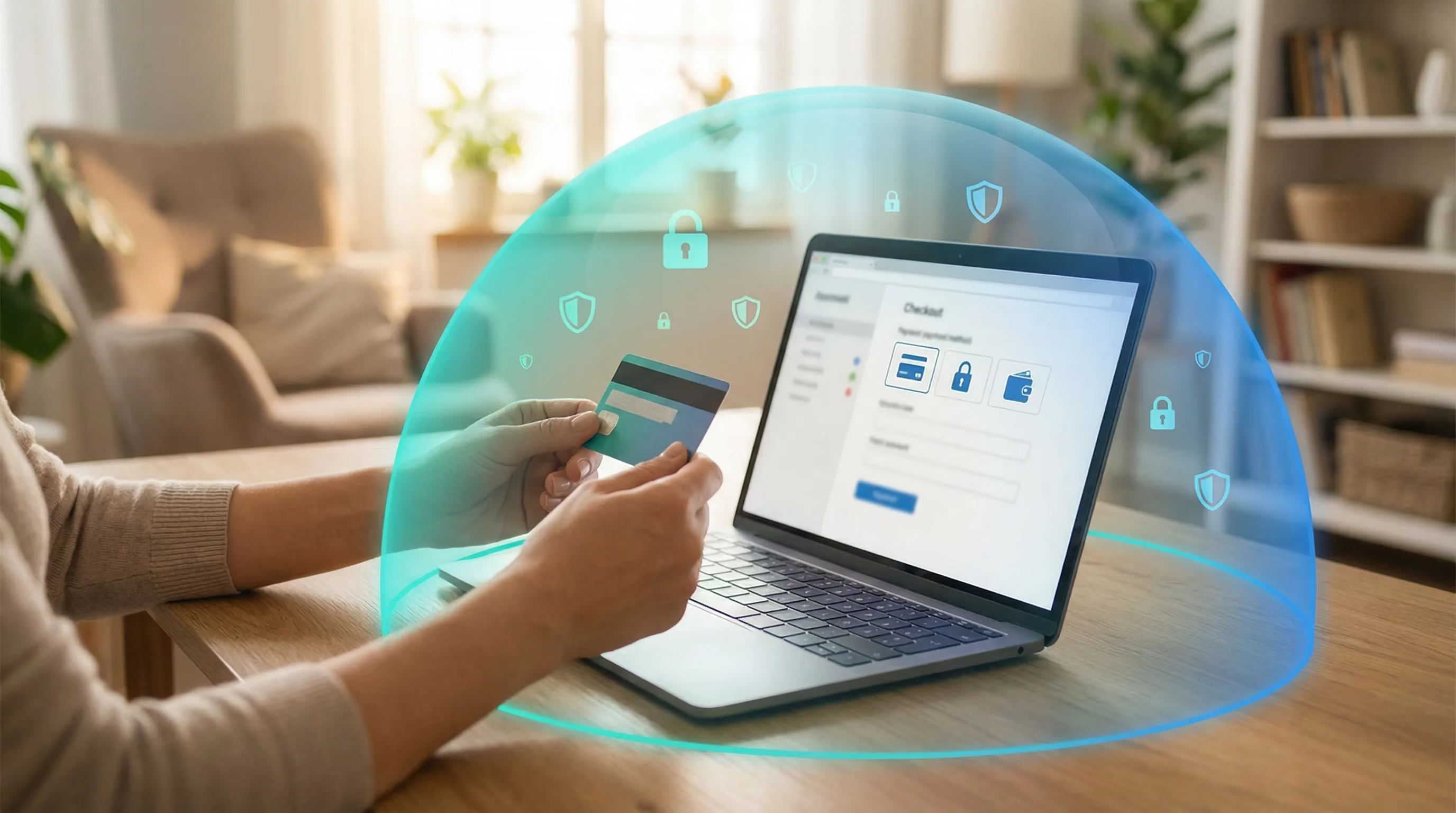
Key Takeaways
- Payment safety is about reversibility: Can you get your money back if something goes wrong?
- Credit cards offer the strongest protection: Federal law limits liability and provides dispute rights.
- Debit cards are riskier than they appear: Money comes directly from your account, making fraud recovery slower.
- Payment apps offer almost no protection: Zelle, Venmo, and Cash App are designed for trusted recipients.
- Gift cards and crypto are scammer favorites: Untraceable and irreversible by design.
If a seller pushes you away from credit cards toward gift cards, crypto, wire transfers, or Zelle, they are trying to remove your dispute option. Choose a payment method you can reverse, or buy elsewhere.
{{component-cta-custom}}
Why Your Payment Method Choice Matters
When an online purchase goes wrong - product never arrives, it is fake, or the entire store was a scam - your ability to recover depends almost entirely on how you paid.
Scammers understand this. The payment method they request tells you more about their intentions than almost anything else. A legitimate seller wants to get paid. A scammer wants payment that cannot be reversed.
Payment Method Protection Comparison
Payment MethodProtection LevelIf Something Goes WrongScam RiskCredit CardsHighestDispute with issuer; investigation; provisional credit within daysLow - scammers avoid thesePayPal (Goods & Services)GoodFile through Resolution Center; buyer protection for eligible purchasesLow-MediumDebit CardsModerateMust contact bank; money gone during investigation; slower recoveryMediumPayPal (Friends & Family)NoneNo dispute mechanism; no buyer protectionHighZelle/Venmo/Cash AppAlmost NoneDesigned for trusted recipients; no purchase protectionVery HighBank Wire TransferAlmost NoneBank may attempt recovery; success rate very lowVery HighGift CardsNoneNo recovery mechanism; instant and untraceableExtremeCryptocurrencyNoneIrreversible by design; no central authorityExtreme
Why Each Payment Method Is Risky (Or Not)
Credit Cards - Strongest Protection
Why they are safest:
- Federal law (Fair Credit Billing Act) limits your liability for unauthorized charges to $50
- Most issuers offer zero liability - you pay nothing for fraud
- You have 60 days to dispute charges
- During investigation, you typically do not owe the disputed amount
- If the merchant cannot prove legitimate delivery, you get your money back
How disputes work: Contact your issuer, explain the problem, and they investigate. The burden of proof is on the merchant to show they delivered what was promised.
Debit Cards - Less Protection Than They Appear
The key difference: Debit cards look like credit cards, but money comes directly from your bank account. If fraud occurs, you are fighting to get your own money back.
The problem:
- Recovery can take days or weeks - during that time, your money is gone
- You may face overdrafts and missed payments while waiting
- Federal liability limits are higher and time-dependent
- Some banks are better than others at resolving disputes
Payment Apps - Almost No Protection
The danger with Zelle, Venmo, and Cash App:
- These are designed for sending money to people you know and trust
- They are fast precisely because they skip verification steps that protect you
- Once money is sent, it is essentially gone
- Zelle explicitly states they do not offer purchase protection
Reality: If you Zelle money to a scammer, you will likely never see it again. The apps may investigate, but recovery is rare.
Gift Cards - Scammer Favorite
Why scammers love them:
- Gift cards are cash equivalents - once someone has the code, the money is theirs
- No identity verification required to use them
- No dispute process exists
- They are available everywhere and hard to trace
Hard rule: Any seller demanding gift card payment is not legitimate. No legitimate business accepts gift cards as payment for purchases.
Cryptocurrency - Irreversible by Design
Why scammers love crypto:
- Transactions are irreversible - there is no central authority to appeal to
- Anonymity makes tracing difficult
- No dispute process exists
- Victims often do not fully understand how it works
Red Flags at Checkout
Red FlagWhat It MeansOnly accepts wire transfer, crypto, or gift cardsAlmost certainly a scam - legitimate sellers accept cards"Cards temporarily unavailable" at checkoutScammer trying to force you to an irreversible payment method"10% off for Zelle/Venmo payment"Discount to make you give up your dispute rightsDirects to unfamiliar payment platformPossible credential harvesting sitePersonal Venmo/Cash App instead of business accountNot a legitimate businessPressure to pay immediatelyLegitimate sellers let you think
If You Already Paid a Scammer
Payment MethodAction to TakeRecovery ChancesCredit CardCall issuer immediately; dispute the chargeGood - strong legal protectionsDebit CardCall bank immediately; request investigationModerate - slower, but possiblePayPalOpen dispute in Resolution Center within 180 daysModerate - depends on evidenceWire TransferContact bank within hours; file fraud reportPoor - money moves fastZelle/VenmoContact the service and your bank; file reportsVery Poor - designed for trusted transfersGift CardsContact gift card company; keep card and receiptVery Poor - usually unrecoverableCryptocurrencyReport to FBI IC3; consult recovery specialistNone - transactions are irreversible
{{component-tips}}
How Guardio Helps You Avoid Payment Scams
The safest payment method in the world does not help if you are paying a scammer. Guardio protects you at the moment before payment - when you are on a website deciding whether to trust it.
- Fake shopping site detection: Scam shopping sites pop up constantly, especially around holidays and sales events. They offer impossible deals, collect payment, and disappear. Guardio identifies these fraudulent stores and warns you before you enter payment information.
- Lookalike brand detection: Scammers create sites like "n1ke-outlet-sale.com" or "amazon-deals-today.net" that mimic real retailers. Guardio recognizes these impersonation attempts and blocks them - even if the domain was registered hours ago.
- Phishing checkout protection: Some scams intercept you at checkout with fake payment pages that capture your card details. Guardio detects when a checkout flow redirects to a malicious domain.
- Real-time protection across devices: Whether you are shopping on your laptop, tablet, or phone, Guardio provides consistent protection.
{{component-cta-custom}}
Sources
FAQs
What is the safest way to pay online?
The safest option is usually the one with the best fraud protections and dispute path. If you are unsure about a store, prioritize protection over convenience.
Are gift cards safe for payments?
Be cautious. Gift cards are often used in scams and are hard to recover once codes are shared.
Is crypto safer than a credit card?
For unknown sellers, crypto can be riskier because it is typically harder to reverse. Focus on verifying the seller first.
Should I save my card on a new store?
Avoid saving cards on stores you do not fully trust. Use one-time card features when available.
What if the checkout looks unusual?
Stop and verify the store through a trusted path. Do not rush to pay because a banner says the deal is ending.
What should I do if I suspect fraud after paying?
Contact your payment provider quickly, document the transaction, and monitor accounts for follow-up charges.


 Safe Browsing
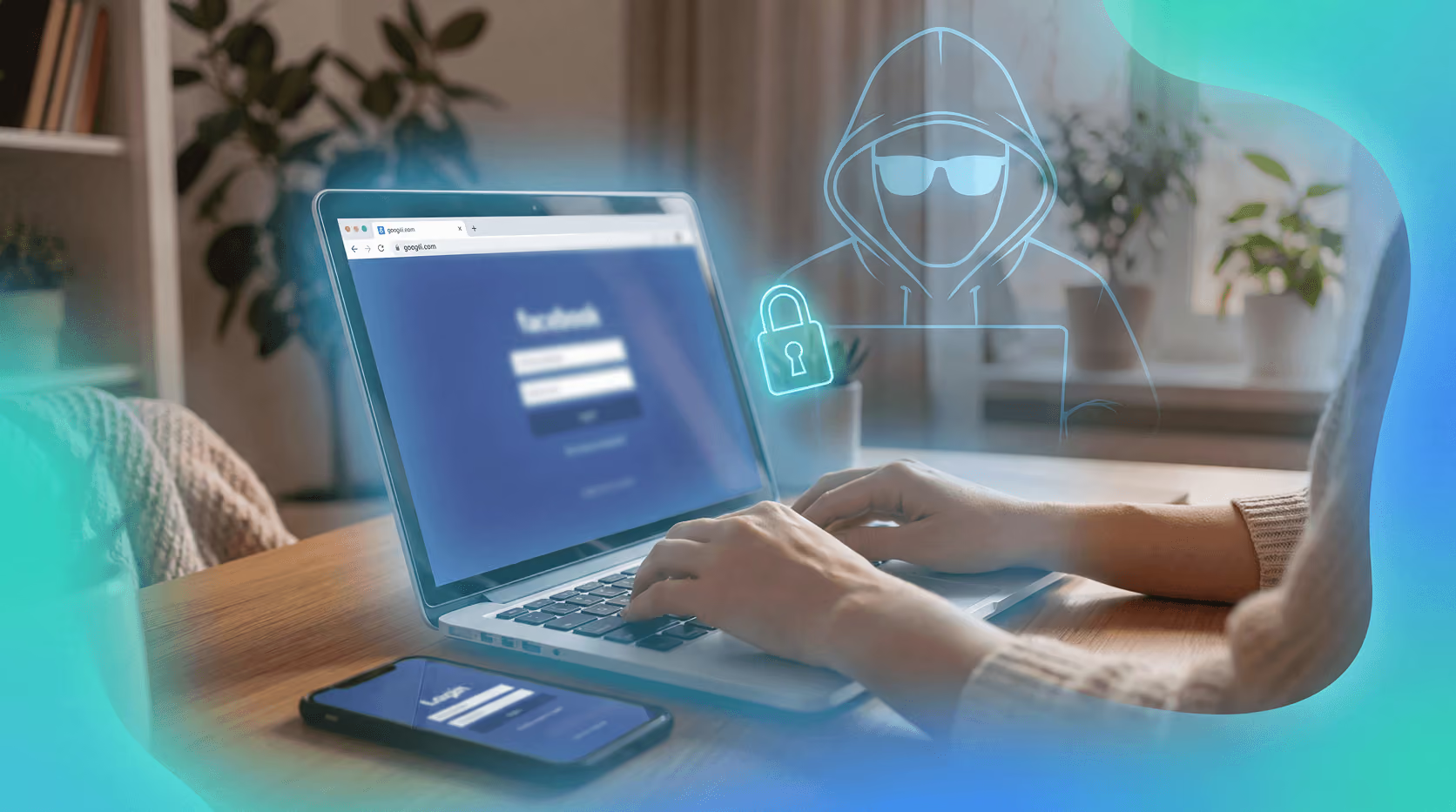
Typosquatting: The One Typo That Could Cost You Your Login


